

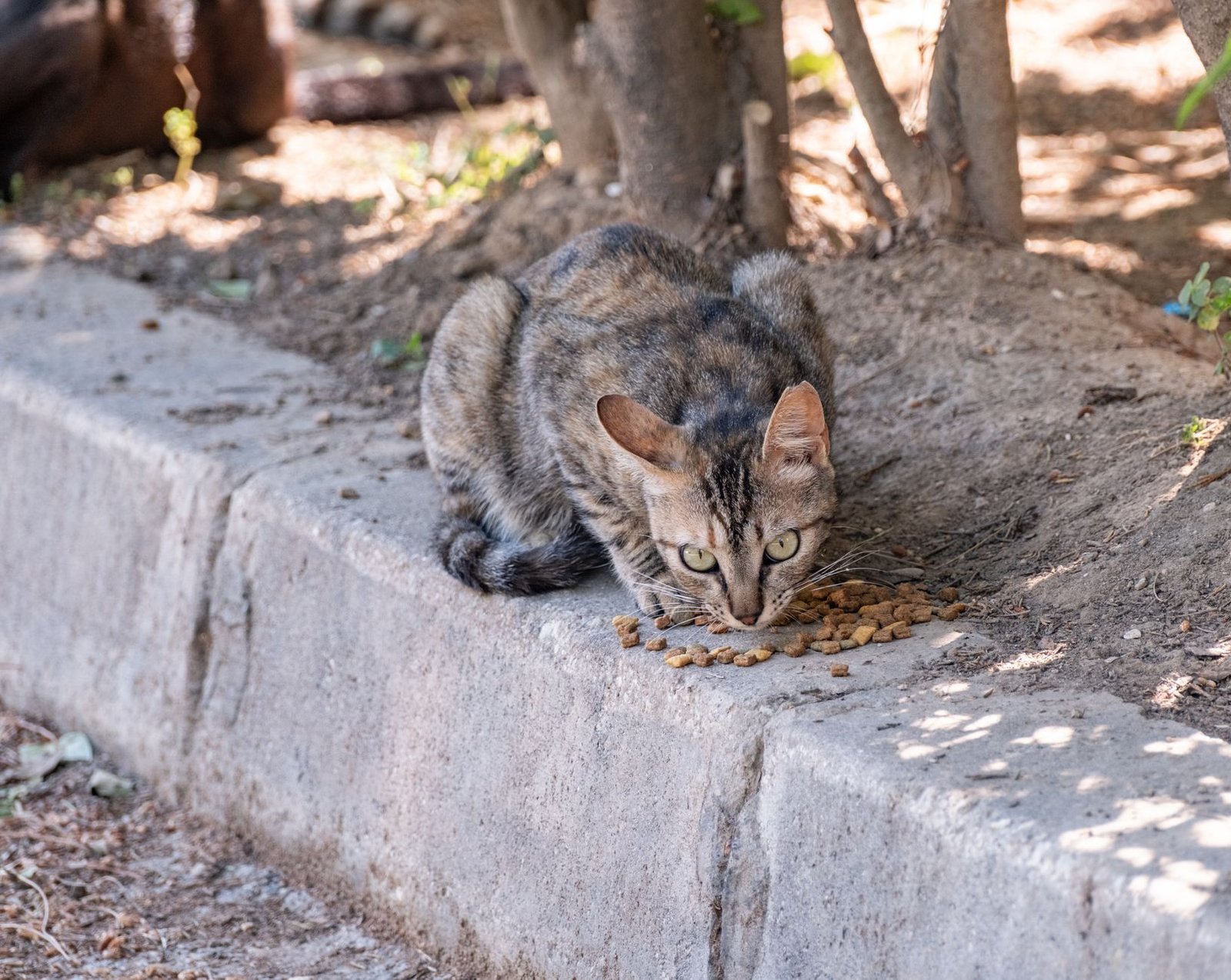
A bird feeder feeds more than birds. Spilled seed under it draws rats and mice, which draws neighbours to put bait down, and a hunting cat sits in the middle of that chain. Wet seed in the tray also grows moulds that cause tremors. The feeder is fine; what collects underneath is the problem.
Why October is when feeders start mattering
Feeders go up as the weather turns, which is exactly when rodents are relocating indoors and when seed stops drying out between refills. Through July a spilled handful is gone within a day. By late October the ground under a feeder stays damp, the hulls build up, and the pile becomes a reliable food source.
Around Point Grey, with gardens backing onto gardens and plenty of mature planting, that pile is a small ecosystem within a couple of weeks. Most of it is harmless. Three parts are not.
The rodent chain, and where your cat sits in it
This is the main reason this article exists, and the logic is worth following all the way through.
Spilled seed feeds rats and mice. A productive food source means more of them, and more of them means somebody on the block puts bait down, which is entirely reasonable of them. A cat who hunts around a feeder is now hunting in a baited area.
Not every rodent product carries that risk onward, and the distinction is narrow. The blood-thinning type lingers in a rodent’s liver, so a cat working the same baited garden week after week can accumulate it. One mouse, from a cat who is otherwise well, is a different proposition entirely. The nerve-acting and calcium-raising products do not store up that way, so a cat is far more at risk from finding the bait itself than from catching something that ate it, though with the nerve-acting products in a cat it is not quite nothing.
So the thing to flag to us is a pattern rather than an incident. A cat who hunts successfully around a feeder in a street where someone is baiting, and who then turns pale, tires easily, breathes with effort or bruises for no reason, needs an appointment that day. The gap between swallowing and showing is usually three to five days, which is long enough that nobody connects the two.
Bait found chewed, or a cat you actually watched eating it, is a different call: phone us immediately, bring the box, and ignore how well they look. If we are closed, go straight to an open emergency veterinary hospital instead and phone them on the way. What is written on that box dictates everything we do next.
British Columbia banned the sale and the use of the strongest of these products in January 2023, for the general public and for most commercial operations alike, leaving a short list of licensed essential-service exemptions. Using a leftover box is prohibited too, which is worth knowing. What it could not do is clear out the partly used containers still sitting on garage shelves around Point Grey, and those are the ones a cat meets.
Mouldy seed, and why it is slower than you would like
Seed that sits wet in a tray or on the ground grows moulds, and the one that matters on grain produces aflatoxin, which injures the liver rather than acting on the nerves. It is also slower: a dog grazing on damp spilled seed over days can go off food, turn flat, vomit, show yellow gums or eyes, or bruise unexpectedly, and that can build over a week rather than an afternoon.
So the thing to watch for is not a sudden collapse but a dog who is quietly off colour: eating less, low energy, vomiting, a yellow tinge to the gums or the whites of the eyes, or bruises with no explanation.
Do not wait for it to pass. A single large mouthful of spoiled seed is a same-day call, and a dog who has been grazing on wet spilled seed for days is worth reporting even with no signs yet. If we are closed, phone an open emergency veterinary hospital.
The prevention is unglamorous: rake up the spill weekly, do not let a pile build, empty and dry the feeder rather than topping it up over old wet seed, and store the sack indoors in a sealed container rather than in a shed where it sweats.
The other hazards, in proportion
Dropped suet and fat balls. High-fat and attractive to dogs. A dog who eats a block of suet can develop an inflamed pancreas a day or two later, which looks like repeated vomiting, refusing food, a hunched posture and a dog who will not settle. Suet in a plastic net is worse, because the net is a foreign body that does not pass.
Nets and mesh. Peanut feeders and fat-ball nets are the sort of thing a dog swallows along with the contents. Anything long and thin is a surgical problem rather than a blockage, so use net-free products and pick up the packaging.
Nyjer and sunflower hulls. Mostly a volume problem. A dog who eats a lot of hulls can end up with an indigestible mass that does not move on, and the signs are repeated vomiting, no appetite and a dog going quiet over a day or two, so phone us if you see those.
Window strikes. A feeder placed at the wrong distance from glass increases collisions. Either very close, under about a metre, so birds cannot build up speed, or well back, over about ten metres. The middle distance is the dangerous one. A stunned bird on the patio is also precisely what brings a cat running.
Birds themselves. A cat who catches birds can pick up parasites, and bird feeders concentrate both birds and their droppings in one spot. Keeping parasite prevention going through the winter is the practical answer for a hunting cat.
Setting it up so none of this happens
- Site the feeder away from where your dog goes. The single most effective change, and it costs nothing.
- Use a tray or a seed catcher so the spill is collected rather than accumulating on the ground.
- Rake up weekly through the autumn and winter, and bag the hulls rather than composting them where a dog can reach.
- Take the feeder in overnight, or at least from dusk. Most of the rodent activity is after dark, which removes the overnight top-up, though the pile already on the ground is what actually feeds them, so the rake-up is what closes that off.
- Empty and dry the feeder between refills rather than adding fresh seed on top of damp old seed.
- Store seed in a sealed hard container indoors. A paper sack in a shed is a rodent invitation and the seed goes mouldy faster.
- Skip suet and nets if you have a dog.
- Mount it where a cat cannot ambush from cover, in the open and away from fences, shrubs and low walls. It protects the birds and it keeps your cat out of the hunting habit.
- Bring cats in before dusk. It removes the overnight hunting entirely rather than just reducing it, and overnight is when the exposure happens.
- Have the awkward conversation over the fence. If your cat hunts, finding out now what the neighbours put down beats finding out in an emergency.
Come in through our urgent care for a tremoring dog, a swallowed net, or a cat who is pale and tired. Our pet diagnostics team runs the clotting tests that show whether an anticoagulant exposure is affecting your cat, and those are repeated a couple of days later rather than read once. Our medical services team manages the course that follows, which for that group runs over weeks rather than days, and our wellness program is where parasite prevention for a hunting cat gets sorted out in advance.
We are open 9:00 AM to 7:00 PM Monday to Saturday and 9:00 AM to 5:00 PM on Sunday. The windows to plan around are before nine in the morning, after we close, and Sunday evenings after five. A dog who has eaten mouldy seed and is tremoring, or a cat who has eaten bait, should not wait for us to open: go to the nearest open emergency veterinary hospital and phone ahead before you leave.
Our guide to how cats hide joint pain covers a different autumn change in cats, and it is relevant here for one reason: a cat who has stopped climbing or jumping has usually stopped hunting too, and that change is worth noticing rather than welcoming.
Questions we are asked
Should I just take the feeder down?
You do not have to. Feeding birds is worth doing and almost all of the risk here comes from the spill rather than the feeder. A seed tray, a weekly rake-up, bringing it in overnight and storing the sack indoors handles the great majority of it. If you have a dog who eats everything off the ground and a yard with nowhere to put a feeder out of reach, then taking it down is a reasonable choice, but it is the last option rather than the first.
My cat brought in a mouse from under the feeder. Should I be worried?
One mouse, in a cat who seems perfectly well, is rarely the problem. Carrying danger onward builds up over repeated meals, and it only really applies to the blood-thinning products, so what shifts the answer is whether anyone nearby is baiting and whether this is a weekly event rather than a one-off. Weekly deliveries from a garden where baiting is going on put a cat in the group we would rather keep an eye on. Pallor, flagging energy, laboured breathing or odd bruises in such a cat mean an appointment that day.
How quickly does mouldy seed affect a dog?
Slower than people expect, which is the awkward part: liver injury from mouldy grain can build over days rather than declaring itself in an afternoon. So there is no safe window to watch through. A large single mouthful is a same-day call, and repeated grazing on damp spilled seed is worth telling us about before anything looks wrong, because that is the pattern that does the damage.
Is the seed itself toxic?
Not in itself. Sunflower, nyjer and mixed seed are not poisonous to dogs or cats, and a dog who eats a mouthful of clean dry seed will most likely be fine. The problems are what grows on it once it is wet, the volume if a dog eats a large quantity of indigestible hulls, and the suet and nets that often come with it. Clean, dry and in small amounts is a non-event.
Where should the feeder go relative to the windows?
Either very close to the glass, within about a metre, or well away from it, more than about ten metres. The middle distance is where birds pick up enough speed to be hurt by a collision. From a pet point of view, the close option has the advantage that a stunned bird lands against the house rather than in the middle of the yard where a cat is waiting.
My dog ate a fat ball, net and all.
Phone us. Two separate issues: the fat load, which can inflame the pancreas over the following day or two, and the net, which will not break down and which behaves like any other long thin object in a gut. Watch for repeated vomiting, refusing food, a hunched posture or straining with nothing passing, and if you can see any of the net at either end, do not pull it.
Will a feeder make my cat a better hunter?
It will make hunting easier and more rewarding, which over a season does tend to produce a cat who hunts more. If you would rather not encourage it, site the feeder in the open away from cover so there is nowhere to stalk from, keep it high, and bring your cat in before dusk. A bell cuts the number of mice a cat catches substantially, with trials putting it around half, though it makes much less difference to rats. It is worth fitting, but it is not a substitute for bringing the cat in before dusk.
Speak to the team at University Veterinary Clinic
If your dog is tremoring after time in the yard, has swallowed a net, or your cat is unexpectedly pale, tired or bruising, phone us and come in. Outside our hours, go to the nearest open emergency veterinary hospital and phone ahead before you leave.
Published by the team at University Veterinary Clinic.
This article is educational in nature and is not a replacement for hands-on assessment of your own pet by a veterinarian.
University Veterinary Clinic
4416 W 10th Ave #103, Vancouver, BC V6R 2H9
Phone: (604) 224-7743
Hours: Monday to Saturday 9:00 AM to 7:00 PM; Sunday 9:00 AM to 5:00 PM