
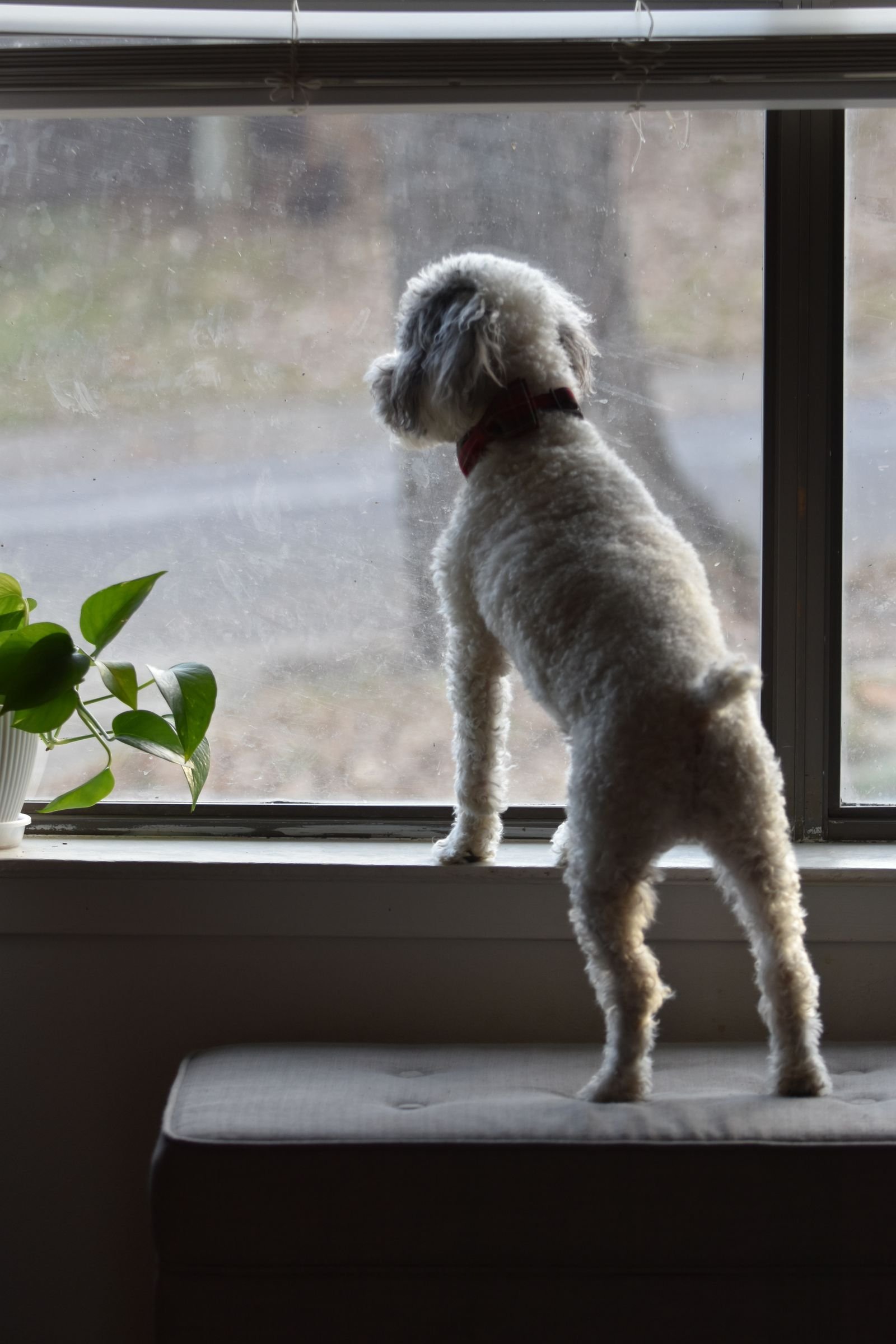
Separation anxiety is genuine distress a dog feels when left alone, not spite or poor manners. Typical signs include barking after you leave, chewing at doors, and house soiling that only happens when nobody is home. It usually improves with gradual departure training, enrichment, and calm routines, and a veterinarian can check for medical causes and guide a behaviour plan.
What separation anxiety actually is
Separation anxiety is a panic response some dogs have when the person they are bonded to leaves. The key word is panic. A dog in this state is not choosing to misbehave and is not acting out of spite. Their body is flooded with stress, much like a person having an anxiety attack, and the barking or chewing that follows is a symptom of that distress rather than a decision.
Understanding this changes everything about how you respond. If the chewed door frame were simple mischief, correction might make sense. Because it is fear, the goal instead is to teach your dog, step by step, that being alone is safe and predictable. That mindset shift is the foundation for every strategy that follows.
Common signs to watch for
The most recognisable signs are vocal and physical: barking or howling that starts soon after you leave, destructive chewing or scratching focused on doors and windows, and pacing or restlessness that neighbours may hear through shared walls. Some dogs drool heavily when anxious, and you may come home to a damp chin, wet bedding, or puddles near the exit points.
Other signs are quieter but just as telling. A dog that soils the house only when alone, despite being reliably trained when you are home, is showing a classic pattern. So is a dog that refuses to touch food or a treat toy until you return. A camera or phone set to record after you leave can reveal a great deal about what your dog actually does in that first hour.
Why summer schedule changes can set it off
Late summer is a common trigger point. Vacations end, workplaces call people back to the office, and households near UBC shift rhythm as students and families move into the busy fall term. A dog that spent July with constant company can suddenly find itself alone for eight hours a day, with no gradual adjustment in between.
On Vancouver’s west side, many dogs in Point Grey and West Point Grey homes have simply never practised long stretches alone by the time September arrives. The change in routine, not any fault in the dog, is what tips some of them into distress. If you know a schedule shift is coming, starting short practice absences a few weeks ahead gives your dog time to adapt.
Anxiety, boredom, or incomplete training?
Not every chewed shoe means anxiety. A bored dog tends to sample mischief all over the house, often hours after you leave, and greets you cheerfully rather than frantically. A young dog with incomplete house training will have accidents whether or not you are home. Anxiety looks different: the distress begins within minutes of your departure and often targets exits, such as doors, windows, and the crate itself.
Timing and pattern are the clearest clues. Ask yourself whether the behaviour happens only when your dog is alone, whether it starts right after you leave, and whether your dog seems agitated as you prepare to go, pacing or shadowing you as you pick up keys. If the answer is yes, anxiety is more likely than boredom, and the plan should focus on emotion, not obedience.
Gradual departures and calm comings and goings
The core of treatment is teaching your dog that departures are brief, boring, and survivable. Start with absences so short your dog stays relaxed, even if that is thirty seconds, and build up slowly over days and weeks. Step out, return before distress starts, and repeat. Progress is measured by your dog’s calm, not by the calendar, so resist the urge to jump ahead.
Keep arrivals and departures low key. Long, emotional goodbyes and excited reunions teach your dog that your leaving is a big event worth worrying about. Instead, slip out quietly and greet your dog calmly once they have settled after you return. Mixing up departure cues, such as picking up your keys and then sitting back down, also helps drain the dread out of those signals.
Enrichment helps, punishment hurts
A dog with a satisfied body and busy mind copes better with alone time. A good walk or play session before you leave, followed by a food puzzle or stuffed treat toy as you go, gives your dog something positive to associate with your departure. Rotating toys keeps them interesting, and our pet care services team is glad to suggest enrichment ideas suited to your dog’s age and energy level.
Punishment, on the other hand, reliably makes separation anxiety worse. Scolding a dog for a mess you find hours later does not connect in their mind to the act itself; it only teaches them that your return is dangerous, which adds fear on top of fear. However frustrating the damage is, the kindest and most effective response is to clean up quietly and adjust the training plan.
When to involve your veterinarian
Some medical conditions can look a lot like separation anxiety, including urinary issues, digestive upset, pain, and age related changes. Before starting a behaviour plan, it is worth having your veterinarian assess your dog to check for underlying causes. Our medical services team can examine your dog, review the history, and help you understand what is driving the behaviour.
If the anxiety is confirmed, your veterinarian can help you build a realistic, humane plan and may discuss options including behaviour support alongside training. Regular checkups through our wellness program are a natural time to raise concerns early, and if your dog ever injures themselves trying to escape, such as broken teeth or torn nails at a door or crate, our urgent care team can help promptly.
Frequently asked questions
Is my dog being spiteful when he destroys things while I am out?
No, spite is not the driver; destruction during absences is usually panic or boredom. Dogs do not plan revenge, and what looks like defiance is most often distress focused on doors and windows as your dog tries to reach you.
How can I tell separation anxiety apart from boredom?
Timing is the biggest clue. Anxiety starts within minutes of your departure and targets exit points, while boredom mischief tends to happen later and roams the whole house. Recording your dog after you leave usually settles the question.
Will getting a second dog fix separation anxiety?
Usually not, because the anxiety is about being apart from you, not about being the only animal in the home. Some dogs are helped by company, but many are not, so it is safer to work on training before adding a pet.
How long does it take for separation anxiety to improve?
It varies widely, from a few weeks for mild cases to several months for severe ones. Progress depends on going at your dog’s pace with gradual departures, and your veterinarian can help you set realistic expectations.
Should I see a veterinarian before starting a training plan?
Yes, a veterinary visit is the right first step. Medical issues such as urinary problems or pain can mimic anxiety, so your veterinarian can assess your dog, rule out health causes, and help shape a behaviour plan.